

Your current SEO tools were not built to track AI search. They report on keyword rankings, but not on whether ChatGPT, Gemini, or Perplexity mentions your brand when a buyer asks a category question. AI visibility audit tools fill that gap, but only if you choose the right ones and connect them correctly.
According to Gartner, traditional search engine volume will drop by 25% before the end of 2026 as AI-powered answer engines take over how people find information. This number is a measurement of a shift already underway. Unfortunately, most SEO agencies and marketing operations teams are still running on a toolset that cannot see it.
Luckily, a new category of AI visibility audit tools has emerged. There are now platforms built specifically to track ChatGPT brand tracking, monitor AI citation monitoring, and feed LLM search analytics into marketing operations workflows.
What Do Legacy SEO Suites Miss About AI Citations, and How Is Monitoring Different from Optimization?
AI citation monitoring and keyword rank tracking measure completely different things. Unfortunately, confusing the two is costing your brand visibility.
Legacy SEO suites track your position in Google’s index. This data means nothing when a language model generates an answer. LLMs synthesize responses from training data and live retrieval.
Your domain authority doesn’t determine whether your brand appears in that answer. It’s your citation rate that matters.
AI visibility audit tools like Profound and Peec AI were built to measure that gap. They track whether your brand appears in AI-generated responses, what sentiment surrounds each mention, and how your share of voice compares against competitors across multiple engines.
Monitoring and optimization are also not the same workflow. Monitoring tells you where you stand across AI engines right now, while optimization changes what AI systems say about your brand over time through content architecture, entity reinforcement, and third-party authority building. Legacy suites don’t separate the two.
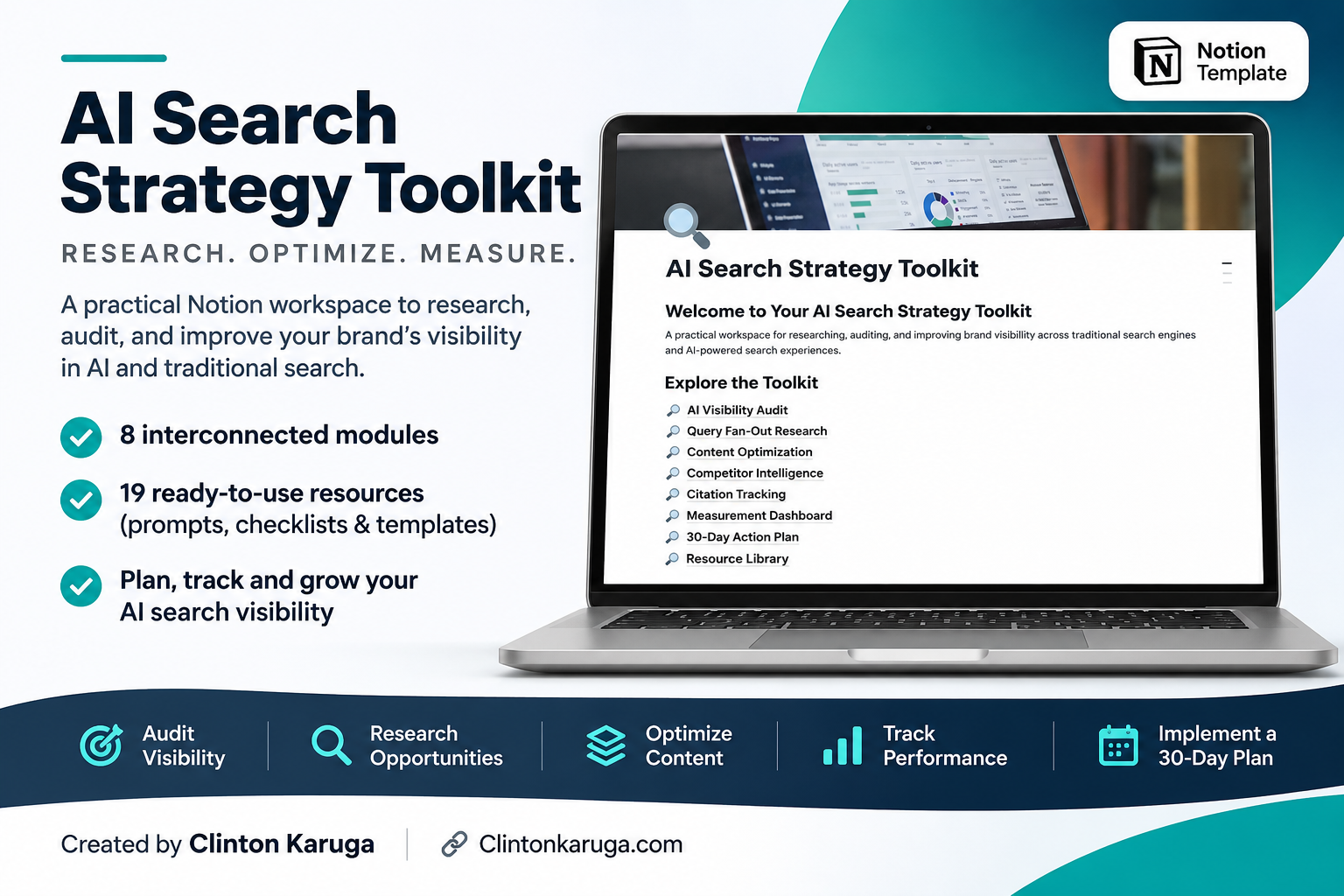
Put Your AI Visibility Strategy Into Practice
Simplify your AI visibility audits, competitor research, and performance tracking with a ready-to-use Notion workspace.
Explore the AI Search Strategy Toolkit →How Do You Evaluate Platform Capabilities for Prompt-Level Tracking, Sentiment Scoring, and GEO Action Layers?
Not every AI visibility audit platform measures the same signals. The capabilities that separate enterprise-grade tools from basic dashboards are prompt-level tracking, sentiment scoring, and GEO action layers, but most platforms only deliver one or two of the three.
Prompt-level tracking is the foundation. It means the platform sends structured queries to AI engines on your behalf, records the full response, and identifies exactly where your brand appears and how it is framed.
Here is what to evaluate in any GEO software comparison:
- Prompt-level citation tracking: Does your brand appear in the generated answer, or only in the source citations below it?
- Sentiment scoring by engine: Does the model frame your brand positively, neutrally, or negatively in each response?
- GEO action recommendations: Does the platform tell you what to change to improve your citation rate, not just report where you currently stand?
- Competitive share of voice tracking: How often do competitor brands appear in the same prompts your brand targets?
- Prompt library size and intent mapping: How many queries does the platform test, and are they matched to real buyer intent?
Most tools in this market offer citation presence data without sentiment scoring. LLM search analytics that track only presence give you a false picture of your actual AI visibility health. Leapd Alex and Indexly both offer sentiment scoring, but their action layers differ.
What Are the Engine Coverage Realities When Measuring API-Based vs. UI-Rendered Retrieval Across LLMs?
Engine coverage is the most overlooked variable in any AI search stack evaluation. Here is how API access and UI-rendered retrieval matter:
API-Based Retrieval
API-based retrieval queries language models through their developer interfaces. The advantage is speed, consistency, and structured output at scale. However, the API-mode responses don’t always match what a user sees in a consumer chat interface.
ChatGPT brand tracking through OpenAI’s API and through ChatGPT’s consumer interface can return different results. The two environments apply different system prompts, different safety filters, and sometimes different retrieval augmentation. A platform that measures only through the API may not reflect what buyers encounter when they ask about your product category in a live session.
UI-Rendered Retrieval
UI-rendered retrieval simulates the actual user experience by interacting with the chat interface directly. It captures the exact response a user would receive, including real-time web retrieval, current safety filters, and any personalization the engine applies.
How Do You Connect the Stack by Linking AI Visibility Metrics to Web Traffic Attribution in GA4?
AI citation monitoring data only becomes operational when it connects to web traffic outcomes. Right now, most teams track AI visibility in one platform and web performance in GA4 with no attribution bridge between them.
Here is how to build that connection:
- Create a custom channel grouping in GA4 for AI referral sources.
- Add UTM parameters to any content you publish that targets AI citation placement.
- Build audience segments in GA4 for sessions where the source matches known AI engine domains.
- Cross-reference LLM search analytics data from your visibility platform against GA4 traffic by landing page.
- Track branded search volume in Google Search Console alongside AI citation frequency.
Most GA4 setups aren’t configured for AI referral tracking yet. If your AI search stack connects AI visibility metrics to measurable web outcomes, you have a big advantage over teams that treat the two data sources as unrelated.
Frequently Asked Questions
Can One Platform in this Comparison Replace All the Others?
Not yet. Profound, Peec AI, Indexly, and Leapd Alex each have specific strengths in engine coverage, sentiment depth, or GEO action layers.
How Often Should You Run a Full AI Visibility Audit?
Run a baseline audit monthly and a full prompt-library audit quarterly. AI models often update and change response behavior without announcement.
Does Strong Traditional SEO Performance Guarantee Strong AI Citation Rates?
Not really. Content that earns strong AI citations tends to have clear E-E-A-T signals, structured data, and dense third-party reference networks.
Evaluate AI Visibility Audit Tools Against the Signals that Drive Brand Presence in AI Search
AI visibility audit tools are the measurement infrastructure that tells you whether your brand exists in the channel where a growing share of discovery now happens. Evaluate platforms against your engine coverage requirements, your need for sentiment depth, and your ability to connect AI citation monitoring to GA4.
Knowing which tools to use is only the first step. The real value comes from understanding whether AI search platforms mention your brand, which competitors they recommend, and what gaps may be limiting your visibility.
I help businesses assess their AI search presence, identify competitive and content gaps, and turn audit findings into an actionable SEO and GEO strategy. Let’s discuss your project.
Stop Guessing. Start Optimizing for AI Search.
Everything you need to research, audit, optimize and track your brand’s AI search visibility in one powerful Notion workspace.
✓ 19 ready-to-use resources
✓ AI visibility and competitor tracking
✓ 30-day implementation roadmap